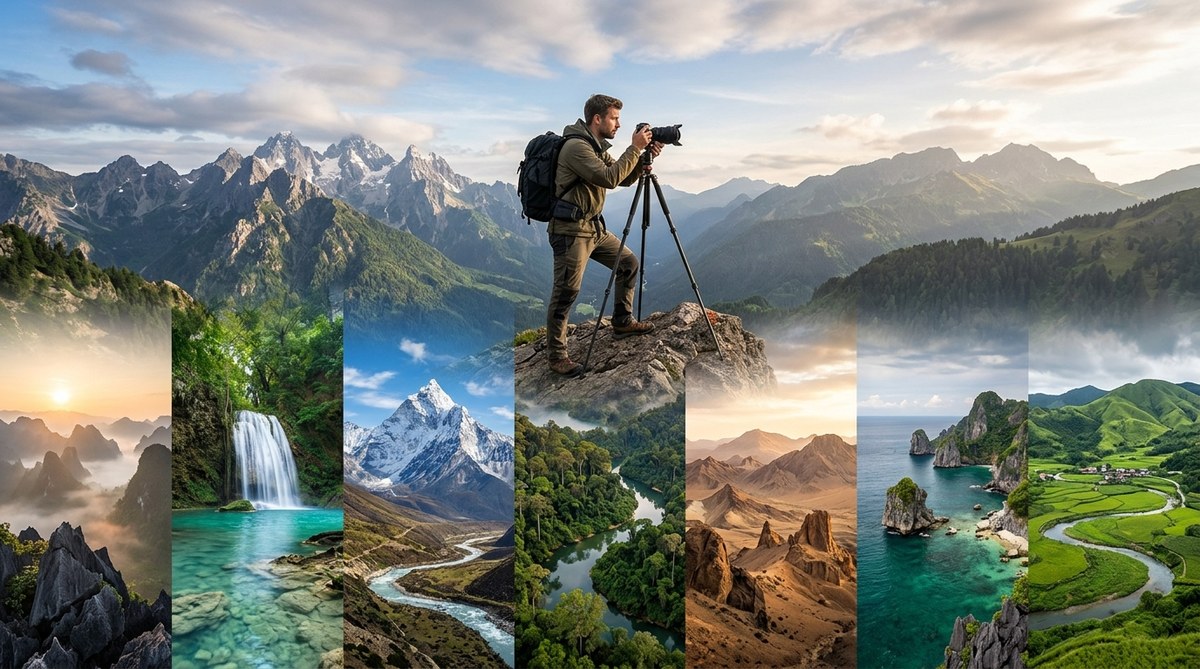
Every landscape photographer knows the struggle. You fly halfway around the world, hike to a famous viewpoint, and find twenty other tripods already set up. The light is beautiful, but the scene feels crowded. Your images look just like everyone else’s.
That is where underrated national parks in Asia come in. These places offer epic landscapes without the crowds. They give you room to breathe, time to compose, and a chance to capture something truly your own. Whether you shoot for social media or build a portfolio, these hidden parks will transform your work.
This guide covers seven underrated national parks in Asia for landscape photography. Each park offers unique geological features, seasonal light conditions, and practical tips for capturing epic photos. You will learn the best times to shoot, what gear to pack, and how to compose shots that stand out. No crowded viewpoints. Just raw, dramatic nature.
Why These Parks Deserve Your Attention
Asia is home to some of the most photographed national parks on earth. Think of Zhangjiajie in China or Komodo in Indonesia. They are famous for a reason. But the parks listed here fly under the radar. They receive fewer visitors, which means less foot traffic and more pristine conditions.
For an amateur or semi-professional photographer, this is gold. You get:
- Uninterrupted shooting time. No one walks into your frame.
- Unique compositions. You find angles that haven’t been overused.
- Better wildlife opportunities. Animals are less skittish in quieter parks.
- Lower costs. Permits and accommodation are often cheaper.
If you want to build a portfolio that stands out, these parks are your secret weapon.
The 7 Underrated National Parks in Asia for Epic Landscape Photography
Here is the list you came for. Each park includes a breakdown of its best features, ideal seasons, and photography tips.
1. Taman Negara National Park, Malaysia
Taman Negara is one of the oldest rainforests on earth. It is estimated to be over 130 million years old. The park covers 4,343 square kilometers of dense jungle, winding rivers, and limestone hills.
Best for: Misty jungle scenes and river reflections.
When to go: March to September for drier conditions. The dry season means less haze and clearer skies.
Photography tip: Use a polarizing filter to cut through the canopy glare and saturate the greens. A telephoto lens helps isolate details like ferns, waterfalls, and birds.
2. Phong Nha Ke Bang National Park, Vietnam
Phong Nha Ke Bang is famous for its caves, but most tourists only visit Son Doong. The rest of the park is wide open. Limestone karsts rise from the jungle floor. Rivers carve through valleys. The light changes fast as clouds roll over the peaks.
Best for: Karst landscapes and cave entrances.
When to go: February to August. The dry season offers the best light for cave photography.
Photography tip: Shoot during the golden hour when the sun filters through the limestone. Use a tripod for long exposures inside the cave mouths. For more on this technique, read about mastering low light photography techniques in Asian landscapes.
3. Khao Yai National Park, Thailand
Khao Yai is a coastal park about two hours south of Bangkok. It has mangrove forests, rocky headlands, and quiet beaches. Most tourists skip it for the islands, which means you get the coastline to yourself.
Best for: Coastal landscapes and mangrove reflections.
When to go: November to February. The cool season brings clear skies and calm seas.
Photography tip: Use a wide-angle lens to capture the contrast between the green mangroves and the blue water. A neutral density filter allows for silky long exposures of the waves.
4. Gunung Leuser National Park, Indonesia
Gunung Leuser sits in northern Sumatra. It is one of the last places on earth where you can photograph orangutans in the wild. The park is also home to volcanic peaks, hot springs, and dense rainforest.
Best for: Wildlife and volcanic landscapes.
When to go: June to September. The dry season makes trekking easier and animals more active.
Photography tip: Bring a 70-200mm lens for wildlife. For the volcanic landscapes, shoot at sunrise when the mist lifts from the valleys. Check out our guide on mastering wildlife photography in Asia for more tips.
5. Hkakabo Razi National Park, Myanmar
Hkakabo Razi is the highest peak in Southeast Asia. The park is remote and rarely visited. It offers alpine meadows, glaciers, and deep river gorges. This is not a place for beginners. You need a guide and proper gear.
Best for: Alpine landscapes and glacial rivers.
When to go: October to April. The dry season is the only safe time to trek.
Photography tip: Use a graduated neutral density filter to balance the bright sky against the dark valleys. A sturdy tripod is essential for sharp shots in low light.
6. Nam Et Phou Louey National Park, Laos
This park in northern Laos is known for its rugged limestone mountains and traditional villages. It is one of the least visited parks in the region. The light here is dramatic, with fog rolling through the valleys in the morning.
Best for: Foggy mountain landscapes and cultural scenes.
When to go: November to February. The cool season brings consistent morning fog.
Photography tip: Shoot from a high vantage point to capture the fog filling the valleys. Use a telephoto lens to compress the layers of mountains. For composition ideas, see our article on 7 composition tips for stunning wide-angle landscape shots in Asia.
7. Simlipal National Park, India
Simlipal is a tiger reserve in eastern India. It features waterfalls, grasslands, and dense forests. Most tourists head to Ranthambore or Jim Corbett, leaving Simlipal quiet.
Best for: Waterfalls and grassland panoramas.
When to go: October to March. The post-monsoon season makes waterfalls full and lush.
Photography tip: Use a slow shutter speed to blur the waterfalls. A wide-angle lens captures the scale of the grasslands. Bring a lens cloth for the spray.
How to Plan Your Trip to These Parks
Planning a photography trip to a remote national park takes more effort than booking a tour bus. Here is a practical checklist.
- Research permits. Some parks require advance booking. Check the official website at least two months ahead.
- Check the weather. Monsoon seasons vary across Asia. Use a weather app specific to the region.
- Pack light. You will hike to most locations. A 24-70mm lens and a 70-200mm lens cover most scenarios.
- Bring backup batteries. Cold and humidity drain batteries faster than usual.
- Hire a local guide. They know the best spots and keep you safe.
- Get travel insurance. Remote parks have limited medical facilities.
- Respect the rules. Do not leave trails or disturb wildlife.
Common Mistakes Photographers Make in Asian National Parks
Even experienced photographers slip up. Here is a table of common mistakes and how to avoid them.
| Mistake | Why It Happens | How to Fix It |
|---|---|---|
| Overpacking gear | Fear of missing a shot | Stick to two lenses and a tripod. |
| Shooting only at midday | Bad light | Plan for golden hour and blue hour. |
| Ignoring the weather | Poor visibility | Check forecasts daily. |
| Not scouting locations | Wasted time | Arrive a day early to walk the area. |
| Forgetting insect repellent | Distraction | Apply before every shoot. |
Gear Recommendations for These Parks
You do not need the most expensive gear to capture epic photos. But certain tools make a difference.
- Tripod. Essential for low light and long exposures.
- Polarizing filter. Cuts glare and boosts color.
- Neutral density filter. Allows longer exposures in bright light.
- Lens cloth. Humidity and spray are constant.
- Rain cover. A plastic bag works in a pinch.
For a deeper look at equipment, read our guide on choosing the perfect camera gear for capturing Asia’s stunning landscapes.
Techniques for Capturing Epic Shots
You have the location. You have the gear. Now use these techniques to make your images stand out.
Master the Golden Hour
The hour after sunrise and the hour before sunset provide the warmest, softest light. In the tropics, golden hour is shorter than in temperate zones. Be ready 30 minutes before the sun rises.
Use Leading Lines
Roads, rivers, and tree branches draw the eye into the frame. Look for natural lines that guide the viewer toward the main subject.
Shoot in Raw
Raw files give you more flexibility in post-processing. You can recover shadows and highlights without losing quality.
Layer Your Foreground
Include a foreground element like a rock, flower, or branch. It adds depth and makes the image feel three-dimensional.
Try Long Exposures
Moving water, clouds, and wind-blown grass become smooth and dreamy with long exposures. Use a tripod and a remote shutter release.
For more on this topic, see our article on how to capture the perfect long exposure shot of Asia’s coastal rock formations.
A Quick Reference for Composition
When you arrive at a location, run through this checklist.
- Rule of thirds. Place the horizon on the upper or lower third.
- Foreground interest. Add something close to the lens.
- Diagonal lines. They create energy and movement.
- Negative space. Empty areas give the subject room to breathe.
- Symmetry. Reflections in water or lakes work wonders.
What to Do When the Weather Turns Bad
Bad weather does not mean bad photos. Some of the most dramatic images come from storms, fog, and rain.
- Fog. Emphasizes depth and mystery. Shoot from a high point.
- Rain. Adds mood and texture. Use a fast shutter speed to freeze droplets.
- Overcast skies. Soft light reduces harsh shadows. Great for forest scenes.
- Storms. Capture lightning with a long exposure and a sturdy tripod.
For storm photography tips, check our guide on mastering monsoon moods how to capture dramatic storm light over Asian landscapes in 2026.
A Final Note on Post-Processing
You do not need to over-edit. The goal is to enhance what you saw, not replace it.
- Adjust exposure and contrast first.
- Use the clarity slider to bring out texture.
- Boost saturation slightly, but avoid the temptation to oversaturate.
- Crop to improve composition.
- Remove sensor spots with the healing brush.
For a complete workflow, read our guide on mastering Asian landscape photography edits for stunning results.
Your Next Steps as a Landscape Photographer
You now have a list of seven underrated national parks in Asia for landscape photography. You know what gear to bring, when to go, and how to compose your shots. The next step is to book a trip.
“The best camera is the one you have with you. But the best location is the one no one else is shooting.” — Anonymous field photographer
Start with one park. Pick the one that excites you most. Research the permits, pack your bag, and go. The images you capture will be unlike anything you have seen on Instagram. They will be yours.
Take Your Photography Further
If you want to keep improving, here are a few more resources from our site.
- Mastering the art of golden hour landscape photography in Asia
- Top tips for capturing vibrant mountain landscapes in Asia’s remote regions
- Essential techniques for capturing stunning nightscape landscapes across Asia
Where to Go from Here
You have the knowledge. You have the list. The only thing left is to pack your camera and go.
Asia’s underrated national parks are waiting for you. They offer solitude, drama, and beauty that the crowded spots cannot match. Your portfolio will thank you. Your social media feed will stand out. And you will come home with images that tell a real story.
So pick a park. Check the season. Book the flight. And get ready to capture something epic.