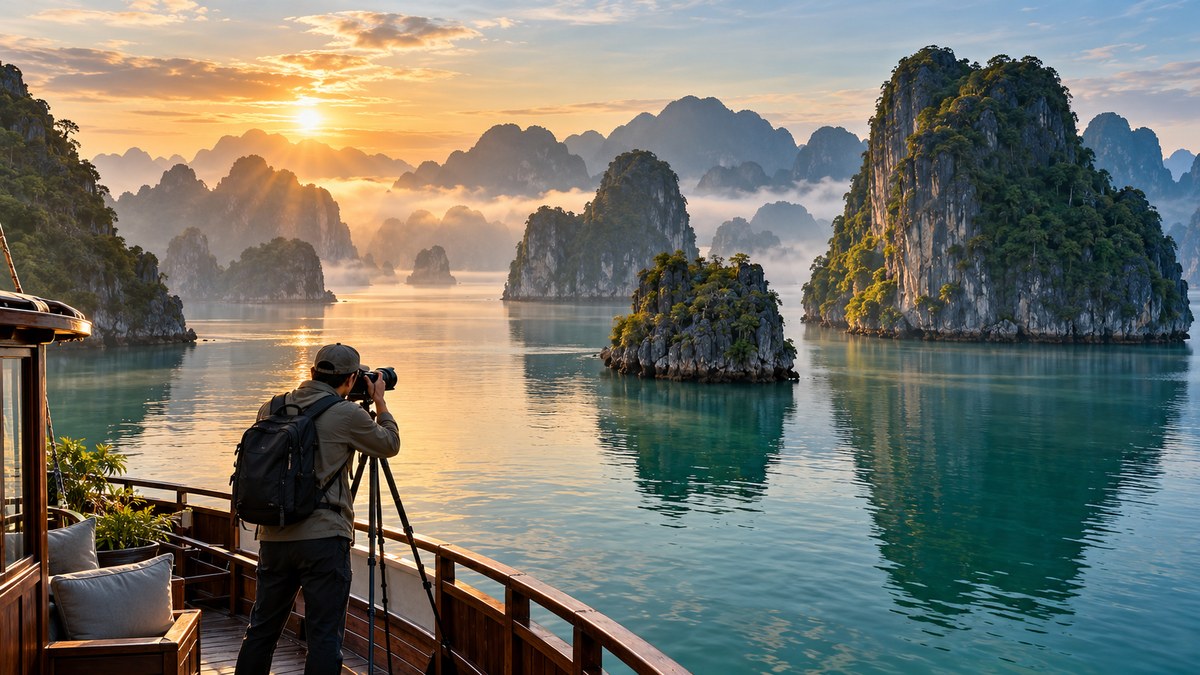
Ha Long Bay looks different every time the light shifts. One moment the karsts are flat gray shapes against a hazy sky. The next, a break in the clouds sets the limestone on fire with gold and amber. That unpredictability is what makes this UNESCO site one of the most rewarding places in Asia to photograph. But to capture its drama, you need more than luck. You need a plan.
The best Ha Long Bay photography tips focus on timing, layers, and patience. Shoot during golden hour for warm light and long shadows. Use a telephoto lens to compress distant karsts. Include a boat or floating village for scale. Watch the weather for mist and storm light. Always shoot in RAW. A polarizing filter cuts glare and deepens the green water.
Why Ha Long Bay Tests Your Skills
Ha Long Bay is not a simple landscape. The sheer number of karsts creates a visual puzzle. Without a strong subject, your frame becomes a jumble of gray lumps. The water is often flat and green. The sky can be hazy for days during the dry season. These conditions frustrate many photographers. But they also reward those who adapt.
The key is to stop trying to capture everything. Instead, look for one strong element. A single karst with a distinct shape. A junk boat cutting through a channel. A patch of mist clinging to the cliffs. Build your composition around that anchor.
The 5 Step Process for a Better Ha Long Bay Shot
Follow this workflow when you arrive at a new spot on the bay. It will save you time and help you find the best compositions.
- Scan the horizon for leading lines. Look for channels between karsts that draw the eye into the frame. A line of boats or floating fish farms can also work.
- Check the light direction. Side light from the early morning or late afternoon creates texture on the limestone. Front light flattens the scene. Back light can create silhouettes.
- Choose your lens based on the mood. A wide lens (16-24mm) works for dramatic skies and foreground interest. A telephoto lens (70-200mm or longer) compresses the karsts and creates a layered, painterly effect.
- Set your exposure for the highlights. The bright sky and reflective water will fool your meter. Bracket your shots by 2 stops. Expose for the sky, then recover shadows in post.
- Wait for movement. A boat, a bird, or a person in a conical hat adds a sense of scale. Without a human element, the karsts can look like abstract shapes.
Gear That Handles the Humidity and Haze
The air in Ha Long Bay is heavy with salt and moisture. Your gear will suffer if you do not protect it. Bring a dry bag and silica gel packs. Change lenses inside the bag. Wipe down your camera body with a microfiber cloth at the end of each day.
For lenses, a polarizing filter is your best friend. It cuts through surface glare on the water and boosts the saturation of the green bay. A graduated neutral density filter helps balance the bright sky with the darker foreground.
If you plan to shoot from a small boat, use a lens with image stabilization. The constant gentle rocking of the boat will blur your shots at slower shutter speeds. A monopod can also help, but it is awkward on a crowded deck.
For more detail on selecting the right tools, read our guide on choosing the perfect camera gear for capturing Asia’s stunning landscapes.
The Best Light Conditions and When to Find Them
Ha Long Bay is not a sunrise or sunset destination in the way that Angkor Wat or the Grand Canyon is. The sun often rises behind a wall of haze. But when the conditions align, the results are worth the wait.
| Condition | Best Time | Technique | Common Mistake |
|---|---|---|---|
| Clear sky | 30 min after sunrise | Use a polarizer to saturate the water | Shooting with the sun directly behind the camera |
| Mist and fog | Early morning, 5:30 AM to 7:00 AM | Use a telephoto lens to isolate shapes | Trying to capture too much of the scene |
| Storm light | Late afternoon before a storm | Shoot at a low angle to include dark clouds | Exposing for the sky and losing the karsts |
| Golden hour | 4:00 PM to 5:30 PM (winter) | Use a long lens to compress layers | Forgetting to check for lens flare |
| Flat overcast | All day | Convert to black and white for mood | Leaving the white balance on auto |
“The most dramatic shots I have taken in Ha Long Bay came during a sudden rain squall. The light turned a strange green, the wind picked up, and the karsts disappeared into the mist. I switched to a 100mm lens and focused on one small island. The resulting image has a mood that a sunny day could never produce.” – Tran Minh, landscape photographer based in Hanoi.
Common Mistakes That Ruin Ha Long Bay Photos
- Overexposing the sky. The haze reflects a lot of light. Your camera will try to brighten the scene, which blows out the clouds. Dial in exposure compensation to -0.7 or -1.0.
- Forgetting to clean the lens. Salt spray is invisible until you see the spots on your images. Carry a lens pen and check your front element every 30 minutes.
- Standing up on a moving boat. This is the fastest way to get a blurry shot. Sit low, brace your elbows on your knees, and use a faster shutter speed (1/250th or higher).
- Shooting only wide angles. A 16mm lens makes the karsts look small and distant. Try a 200mm lens to pull the karsts closer together. The compression creates a more dramatic, graphic image.
For a deeper look at composing with layers, see our article on 7 composition tips for stunning wide-angle landscape shots in Asia.
How to Handle the Crowds in 2026
Ha Long Bay is popular. In 2026, tourism numbers remain high. The main cruise routes are busy from 9 AM to 3 PM. To avoid the crowds, book an overnight cruise that leaves late in the afternoon. You will have the bay almost to yourself at sunrise the next morning.
Another option is to hire a private boat. It costs more, but it lets you visit the less traveled areas like the Lan Ha Bay section. The karsts there are just as dramatic, and you will not have to dodge other boats in your frame.
The Secret to Misty Morning Shots
Mist is your ally in Ha Long Bay. It simplifies the chaos. When the fog rolls in, the karsts become soft shapes that fade into the distance. This creates a classic East Asian ink painting effect.
To capture it, use a long lens (100mm or more). Focus on the nearest karst that still has some detail. Let the rest of the scene fall into soft focus. Do not try to sharpen the mist in post. The haze is what gives the image its mood.
For more advice on shooting in these conditions, check out 5 secret spots for misty morning landscape photography in Vietnam.
Editing Your Ha Long Bay Images
The raw files from Ha Long Bay often look flat. The green water and gray limestone lack contrast. In post, you can bring back the drama.
- Increase contrast. Use a curve adjustment to deepen the shadows and brighten the highlights. Be careful not to crush the blacks.
- Adjust the white balance. The auto setting often leaves a green cast. Warm up the temperature slightly for golden hour shots. Cool it down for misty morning images.
- Use the dehaze slider. This is your best tool for cutting through the atmospheric haze. Apply it gently. Too much dehaze creates an unnatural, crunchy look.
- Crop for composition. Do not be afraid to remove empty sky or water. A square or 4:5 crop often works better than a standard 2:3 for these landscapes.
For a complete workflow, read our guide on mastering Asian landscape photography edits for stunning results.
Bringing Your Best Ha Long Bay Photos Home
The goal is not to take a perfect photo on your first try. The goal is to return with a set of images that tell a story. One wide shot of the bay at sunrise. One intimate shot of a karst with mist. One shot of a local fisherman in a small boat. One shot of the floating village with the karsts behind it.
When you look at those images together, you will feel the atmosphere of the place. That is what makes a travel portfolio strong.
Pack your gear carefully. Watch the weather. Wake up early. And when the light does something unexpected, be ready to adapt. Ha Long Bay rewards patience and punishes haste. Take your time. The bay will show you its best side.