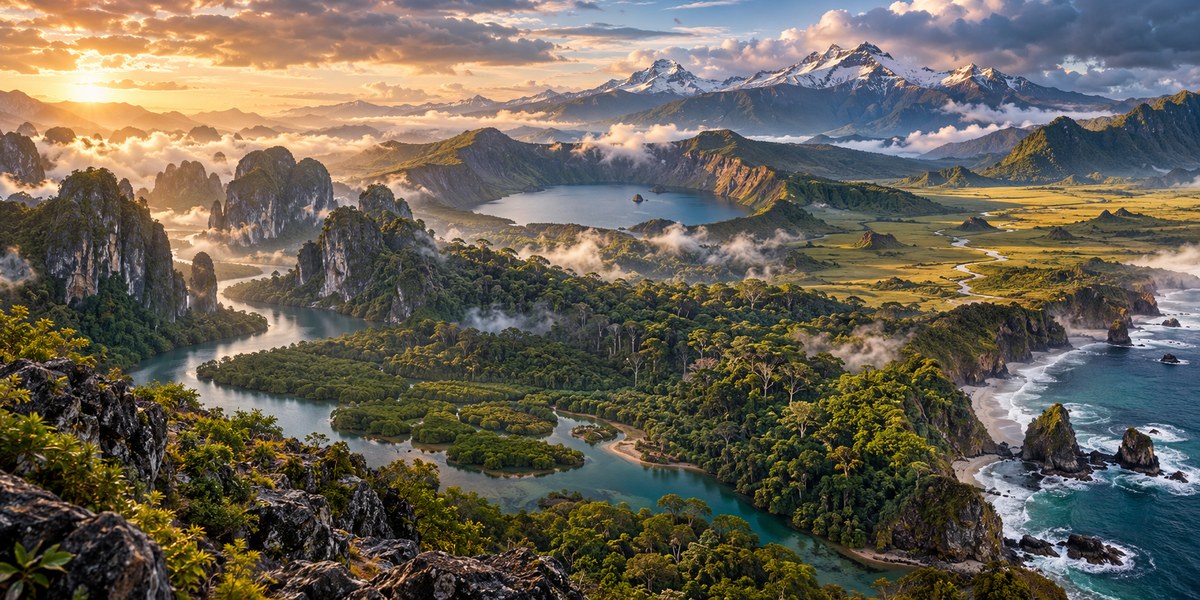
You are standing on a ridge in northern Vietnam. Mist curls around limestone peaks that stretch toward a pale morning sky. The only sound is the wind. No tour buses. No selfie sticks. Just you, your camera, and a landscape that feels untouched. This is the reality of shooting in Asia’s underrated national parks. While everyone else fights for space at iconic spots like Halong Bay or Mount Fuji, these hidden gems offer something far more valuable for a photographer: solitude, raw nature, and endless compositions. If your goal is to capture epic landscape photography without the crowds, it is time to look past the guidebook favorites and find the places that still feel like a discovery.
Asia holds dozens of national parks that rival the world’s most famous landscapes but see a fraction of the visitors. For a travel photographer, this means more time to compose, less distraction, and a higher chance of capturing unique images. The trick is knowing where to go, when to visit, and how to prepare for the conditions. This guide covers seven underrated parks and the techniques that will help you shoot them like a pro.
Why Underrated Parks Are a Goldmine for Photographers
Popular locations come with a hidden cost. You lose the freedom to wait for the perfect light. You compete for angles. You often have to crop out other people in post. Underrated parks solve all of that.
These parks offer three major advantages for landscape photography:
- Fewer people mean more patience. You can wait an hour for the clouds to clear without someone rushing you.
- Less infrastructure means more raw nature. No manicured paths or intrusive boardwalks. Just wild landscapes.
- Lower awareness means fresher compositions. You are not trying to recreate the same shot everyone else has. You are making something new.
Many of these parks are also easier to access than you think. A short flight from a major hub and a local bus ride can put you in the middle of a world-class scene.
7 Underrated National Parks for Epic Landscape Photography
Here are seven parks that deserve a spot on your photography itinerary for 2026. Each one offers a distinct landscape and a chance to capture something memorable.
1. Phong Nha Ke Bang National Park, Vietnam
Most people head to Halong Bay for karst landscapes. Phong Nha Ke Bang offers the same dramatic limestone formations but without the crowds. The park is home to the world’s largest cave, Son Doong, but the above-ground scenery is just as impressive.
The best time to shoot is early morning when mist settles in the valleys. Use a telephoto lens to compress the layers of ridges. For river reflections, visit the Chay River at dawn.
2. Taman Negara National Park, Malaysia
Taman Negara is one of the oldest rainforests on the planet. It feels prehistoric. Giant trees, twisting vines, and dark rivers create a moody atmosphere that works perfectly for low light photography.
Rainy season brings dramatic cloud cover and soft light filtering through the canopy. A tripod is essential here because the forest floor is dark even at midday. Focus on details like ferns, roots, and light beams cutting through the leaves.
3. Khao Yai National Park, Thailand
Thailand has more than just beaches and temples. Khao Yai is a rugged park with waterfalls, evergreen forests, and granite peaks. It is a two-hour drive from Bangkok but feels like another world.
The park has several viewpoints that overlook the valley. Sunrise shots from the top are stunning. Pack a wide-angle lens for the sweeping vistas and a polarizing filter to cut through the morning haze.
4. Gunung Leuser National Park, Indonesia
This park on Sumatra is one of the last places on earth where you can photograph orangutans in the wild. But the landscape itself is also incredible. Dense jungle, volcanic ridges, and hot springs create a variety of scenes.
For landscape shots, head to the higher elevations. The view from the Ketambe area opens up to endless green hills. The light is best just after a rain shower when the leaves are wet and the air is clear.
5. Jigme Dorji National Park, Bhutan
Bhutan limits tourist numbers, which makes this park a true escape. Jigme Dorji is a high-altitude park with glaciers, alpine meadows, and sacred peaks. It is a paradise for anyone who loves mountain photography.
The trek to the base of Mount Jomolhari takes several days, but the payoff is enormous. Snow-capped peaks, rhododendron forests, and pristine rivers fill every frame. A lightweight tripod and a set of ND filters will help you capture the flow of glacial streams.
6. Huai Kha Khaeng Wildlife Sanctuary, Thailand
This remote sanctuary near the Myanmar border is one of the least visited protected areas in Thailand. It is home to waterfalls, bamboo forests, and limestone cliffs. The lack of visitors means wildlife is less skittish and the landscapes are pristine.
The best approach is to hire a local guide and camp for a few days. The light at golden hour is spectacular, and the mist rising from the river creates a dreamlike quality.
7. Kanchenjunga National Park, India
While most photographers head to the Himalaya in Nepal or Ladakh, Kanchenjunga National Park in Sikkim offers a less crowded alternative. The park surrounds the third highest peak in the world, and the views are staggering.
The trek to the base camp is challenging but doable for a fit photographer. The reward is a front-row seat to some of the most dramatic mountain light on the planet. Use a long lens to isolate peaks and a wide lens to capture the scale of the valleys.
A Practical Process for Shooting in Remote Parks
Shooting in underrated parks requires a different mindset than shooting at popular spots. Here is a step-by-step process that works for most situations.
- Research the season. Check rainfall, cloud cover, and temperature for your target dates. Monsoon season can ruin a trip or create the best storm light. Know which one you want.
- Arrive two days early. Use the first day to scout locations and adjust to the environment. Do not plan your hero shot for day one.
- Shoot the same scene at different times. Mist changes. Light shifts. A location that looks flat at noon can come alive at sunset. Return to your favorite spots.
- Pack light but smart. A wide zoom, a telephoto, a tripod, and a set of filters cover 90% of situations. Leave the rest behind.
- Review and adjust each evening. Look at your images on a laptop or tablet. Note what worked and what did not. Adjust your plan for the next day.
Common Mistakes and How to Fix Them
Even experienced photographers make errors when shooting in unfamiliar terrain. Here is a table of common mistakes and the corrections that will save your images.
| Mistake | Why It Happens | How to Fix It |
|---|---|---|
| Overexposed highlights | Bright sky or water tricks the meter | Use exposure bracketing or a graduated ND filter |
| Soft focus | Handheld at slow shutter speeds | Use a tripod and a remote shutter release |
| Flat colors | Harsh midday light | Shoot during golden hour or use a polarizer |
| Cluttered composition | Too many elements in the frame | Simplify. Focus on one subject or leading line |
| Wrong white balance | Mixed light sources in forests | Set a custom white balance or shoot in RAW |
“The best landscape photographs are not taken. They are waited for. Patience is the most important tool in your bag.” — Veteran landscape photographer Michael Kenna
How to Prepare for Your Photography Trip
Preparation makes the difference between a stressful trip and a productive one. Here are the essentials.
- Check visa and permit requirements. Some parks require permits. Book them in advance.
- Download offline maps. Cell service is unreliable in remote parks. Use an app like Maps.Me.
- Bring a backup camera body. If your main body fails, you do not want to lose an entire trip.
- Pack for rain. A waterproof cover for your bag and a rain sleeve for your camera are non-negotiable.
- Learn basic local phrases. A simple “thank you” goes a long way when asking for directions or permission.
For more on gear selection, read our guide on choosing the perfect camera gear for capturing Asia’s stunning landscapes. If you want to improve your mountain shots, check out top tips for capturing vibrant mountain landscapes in Asia’s remote regions.
The Best Times of Year to Visit Each Park
Timing is everything. Here is a quick reference for the optimal months.
| Park | Best Months | Notes |
|---|---|---|
| Phong Nha Ke Bang | February to April | Dry season, low humidity |
| Taman Negara | March to May | Less rain, better light |
| Khao Yai | November to February | Cool air, clear skies |
| Gunung Leuser | June to August | Driest period |
| Jigme Dorji | April to May and October | Stable weather, wildflowers |
| Huai Kha Khaeng | December to February | Cool and dry |
| Kanchenjunga | April to May | Best visibility |
Where to Go Next After You Fill Your Memory Cards
Once you have captured these parks, you might be looking for the next adventure. Asia is full of lesser-known locations that reward the curious photographer. Consider the tea terraces of Luang Prabang in Laos or the volcanic crater lakes of Indonesia. Both offer unique scenes that are still under the radar.
If you want to refine your editing workflow for Asian landscapes, read mastering Asian landscape photography edits for stunning results. For those who want to capture the drama of storm light, our guide on mastering monsoon moods will help you turn challenging weather into your best shots.
Your Next Step Is to Pick One Park and Go
The hardest part of any photography trip is deciding to commit. You can read guides and watch videos forever, but nothing replaces being on location. Pick one park from this list. Check the best season. Book your flights. Pack your gear. Go.
The landscapes are waiting. The light will be different every day. And the images you bring back will be yours alone. That is the real reward of chasing underrated national parks in Asia for photography. Not just a good photo, but a story that no one else has told.