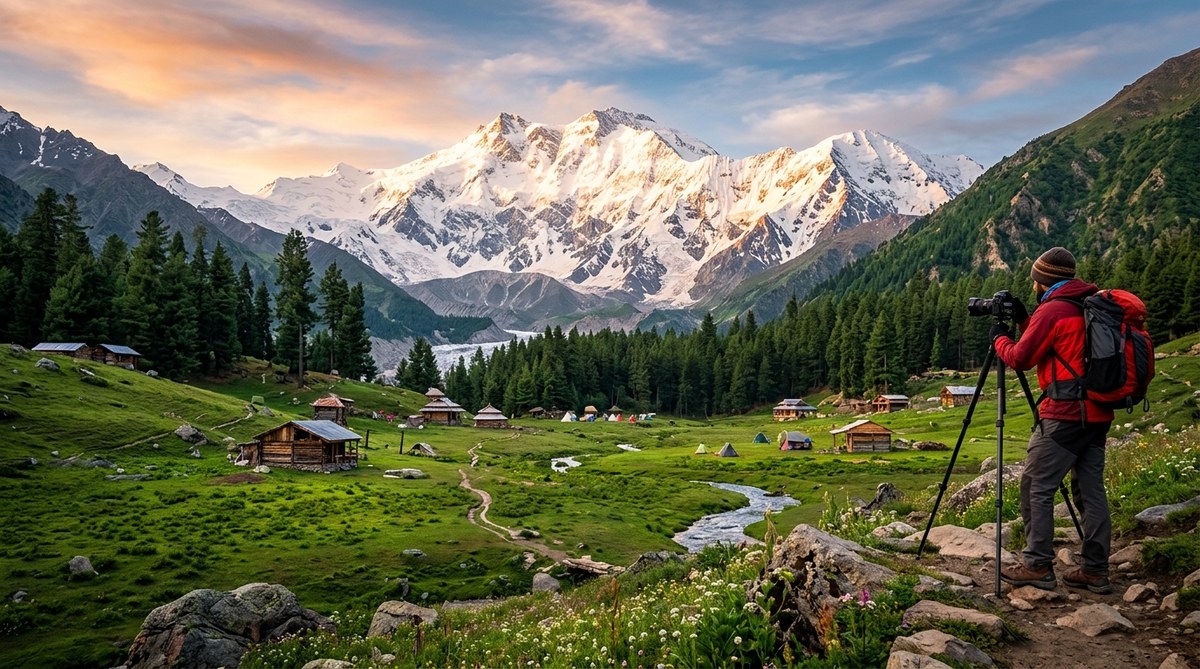
You are standing on a grassy plateau at 3,300 meters. In front of you, the granite face of Nanga Parbat catches the last rays of sun. The air is cold and thin. There is no sound except the wind. This is Fairy Meadows, and it feels like a place that was never meant to be found.
Most people skip Pakistan when they think of adventure travel. That is a mistake. This country holds some of the most dramatic mountain scenery on Earth, and Fairy Meadows is the crown jewel. It is a place where you can push your body on a steep trail during the day and sleep under a sky full of stars at night. For anyone who loves trekking and landscape photography, this destination is a gift.
Fairy Meadows is more than a scenic stop. It is a full adventure travel experience that combines a challenging jeep ride, a rewarding trek, and world-class photography of Nanga Parbat. This guide covers the best time to go, how to prepare, what gear to bring, and how to capture images that do justice to the landscape.
Getting to Fairy Meadows Is Half the Adventure
The journey to Fairy Meadows is not for the faint of heart. It starts in the small town of Raikot Bridge, which is about a two-hour drive from Gilgit. From there, you transfer to a jeep for the ride up to the village of Tattu. This road is famous for a reason. It is narrow, unpaved, and clings to the side of a mountain. The jeep drivers are skilled, but the ride will test your nerves.
At Tattu, the road ends. The real work begins. The trek to Fairy Meadows is about three to four hours. The trail climbs steadily through pine forest and opens up onto the meadow. You will gain elevation, so take your time. The reward at the top is a flat green space with a direct view of Nanga Parbat.
- Arrive in Gilgit by air or road. Book a jeep in advance during peak season.
- Ride to Tattu village early in the morning to avoid afternoon clouds.
- Trek to Fairy Meadows at a steady pace. Stop for water and photos.
- Check into a basic hut or pitch a tent. Settle in before sunset.
What to Pack for a Fairy Meadows Adventure Travel Trip
Packing smart is critical. You cannot buy gear on the trail. You need to carry everything you bring from the jeep drop-off point. Keep your bag under 15 kilograms if you can manage it.
- Footwear: Sturdy hiking boots with good ankle support. The trail has loose rocks.
- Clothing: Layers are your friend. A base layer, a fleece, and a waterproof shell. Nights get cold even in summer.
- Sleeping bag: Rated for at least 0 degrees Fahrenheit. The huts provide blankets, but they are thin.
- Water purification: Tablets or a filter. Streams are plentiful but not safe to drink raw.
- Camera gear: A wide-angle lens is essential. A tripod is non-negotiable for low light shots.
- Snacks: High energy bars and nuts. Food at the huts is basic rice and dal.
The Best Time for Photography and Trekking
Timing your visit is the most important decision you will make. The window for Fairy Meadows is limited to the summer months. Snow blocks the trail for most of the year.
| Month | Conditions | Photography Potential | Crowds |
|---|---|---|---|
| June | Snow melting, trail muddy | Good, but peaks often hazy | Low to moderate |
| July | Clear trails, full greenery | Excellent, wildflowers bloom | Moderate |
| August | Warmest month, stable weather | Excellent, clear skies possible | High |
| September | Cooler, fewer crowds | Good, early snow on peaks | Low |
For photographers, July and August are the sweet spot. The grass is green, the wildflowers are out, and the chance of clear skies is highest. If you want solitude, go in early June or late September. You might deal with some snow or cold, but you will have the meadow almost to yourself.
How to Capture the Landscape at Fairy Meadows
This place is a dream for anyone who loves mastering the art of golden hour landscape photography in Asia. The light here behaves differently than in the lowlands. The air is thin and clear, which means colors are more saturated. Shadows are deeper. You need to adjust your technique.
Start shooting about an hour before sunrise. The light hits the face of Nanga Parbat first. The peak glows orange while the meadow is still in shadow. This contrast is what you came for. Use a graduated neutral density filter to balance the exposure. Without it, the sky will blow out or the foreground will be too dark.
For sunset, turn around. The light behind you paints the meadow in warm tones. The peaks reflect the alpenglow. This is a great time for a wider composition that includes the foreground grass and the mountain.
Expert advice: Do not pack your camera away when the sun goes down. The stars here are incredible. Nanga Parbat under the Milky Way is a shot that very few photographers have. Use a wide aperture and a 20-second exposure. Focus manually on a bright star.
At night, you can practice essential techniques for capturing stunning nightscape landscapes across Asia. The lack of light pollution makes Fairy Meadows one of the best places in the world for astrophotography.
Common Mistakes Photographers Make
Even experienced photographers make errors in this environment. The altitude affects your judgment. The cold drains batteries. The light changes faster than you expect.
- Forgetting spare batteries: Cold kills battery life. Keep spares in an inner pocket.
- Using auto white balance: The snow and grass will confuse your camera. Set a custom white balance or shoot in raw.
- Ignoring the foreground: Many people only shoot the mountain. Include the meadow, a tree, or a tent for scale.
- Staying in one spot: Walk around. The meadow is large. Find unique angles.
- Not protecting gear from dust: The jeep ride and trail kick up fine dust. Use a waterproof bag.
Staying Safe and Respecting the Land
Fairy Meadows is a protected area. Local communities rely on tourism, but they also expect visitors to respect the environment. Pack out all trash. Do not wash in the streams with soap. Stay on the trail to avoid damaging the fragile alpine plants.
Altitude sickness is a real risk. The meadow sits at over 10,000 feet. If you feel a headache or nausea, descend immediately. There is no medical facility on the mountain. Drink plenty of water and avoid alcohol.
The local people are incredibly welcoming. A simple smile goes a long way. Learn a few words of Urdu or the local Shina dialect. It will make your experience richer.
Why This Destination Belongs on Your 2026 List
Adventure travel is about more than just ticking off a location. It is about the feeling of being small in a big world. Fairy Meadows delivers that feeling in spades. The journey is tough. The conditions are basic. But the reward is a view that changes how you see mountains.
If you want to improve your craft, this is the place to practice top tips for capturing vibrant mountain landscapes in Asia’s remote regions. The combination of altitude, light, and scale will push you as a photographer. You will come home with images that stand out from the usual crowd.
Planning Your Fairy Meadows Adventure Travel
The logistics are straightforward once you decide to go. Fly into Islamabad and then take a domestic flight to Gilgit. From Gilgit, hire a jeep for the ride to Tattu. The entire trip can be done in five to seven days if you are efficient. Give yourself an extra day at the meadow in case of weather delays.
Book your jeep and hut in advance during July and August. Spaces fill up. Travel insurance that covers high altitude trekking is strongly recommended.
Bring cash. There are no ATMs on the mountain. Gilgit has a few, but they are not always reliable. Carry enough Pakistani rupees to cover your jeep ride, hut stay, and food.
The trail is open from June to September. Plan your dates around the moon phase if astrophotography is a priority. A new moon gives you the darkest skies.
A Final Word for the Adventurous Traveler
Fairy Meadows is not a luxury destination. It is a raw, wild place that asks something from you. It asks for your effort, your respect, and your patience. In return, it gives you a memory that will last a lifetime. The image of Nanga Parbat at dawn, the cold air in your lungs, the silence of the meadow. That is the real prize.
Go with an open mind. Carry less gear than you think you need. Take more time than you think you have. And when you get home, start planning your next trip into the mountains. This is what adventure travel is all about.